
Last year was already one of the weaker years Canadian real estate has seen in a long time. National home sales totalled 470,314 in 2025, down 1.9% from 2024, and the Canadian Real Estate Association (CREA) noted that 2026 would mark a fourth straight year with sales failing to crack the half-million mark.
Instead of a clean rebound, the new year has started colder: January activity was 16.2% below year-ago levels, and February sales in Canada were down another 8.1% from February 2025.
So far, 2026 looks worse. If you want to go back to a market where we had comparably slow February data, you’d have to go to the Global Financial Crisis of 2009 or the 1990s recession :
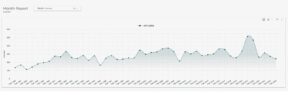 That is what makes February’s housing data so striking. On the surface, affordability is getting a bit better. National Bank’s housing research said January prices fell while more favourable fixed and variable mortgage rates, along with resilient household incomes, supported some markets. Statistics Canada also reported that average hourly wages were up 3.3% year over year in January. In other words, the pure math of buying has improved somewhat.
Affordability vs. Confidence
Housing markets do not run on affordability math alone. They run on confidence. And right now, confidence is getting hit from every direction. Trade-war fears have already soured sentiment in Canada’s housing market, with RBC arguing tariff anxiety has pushed many buyers into a wait-and-see mode and derailed what had looked like a recovery. On top of that, there is now an actual war in the Middle East, which Reuters reports has driven oil prices and bond yields higher again, reviving inflation fears just as buyers were hoping for calmer conditions.
Then there is the labour market. Canada lost 83,900 jobs in February and the unemployment rate rose to 6.7%, according to Reuters’ report on the latest Statistics Canada release.
That matters because buyers do not make the biggest purchase of their lives when they are worried about layoffs, shrinking commissions, weaker bonuses, or whether their employer will still be hiring six months from now. Rising delinquencies add to that caution. CMHC says mortgage arrears have been increasing nationally, with Toronto and Vancouver facing the biggest projected rise in delinquency risk as higher payments, softer prices, weaker resale liquidity and a weaker labour market all collide.
Not Just A Weather Problem
And yes, if you want to be charitable, maybe blame the weather too. CREA’s January release literally argued the early-year slump was “probably more about a historic winter storm than a downshift in demand.” Fair enough. But by February, it is harder to pin this on snow alone. This looks less like a weather event and more like a market stuck between improving affordability and worsening uncertainty.
Canada’s housing market remained subdued in February, with national activity still searching for a catalyst. Home sales dipped 1.3% month over month, while actual sales came in 8.1% below February 2025. New listings also fell, down 3.9% from January, leaving the national sales-to-new listings ratio at 47.6% — still within the broad range CREA considers balanced, but below the long-term average of 54.8%.
Balanced Market? Maybe, and Maybe Not
That headline is not especially dramatic on its own. What matters more is what sits underneath it: a market that remains soft nationally, but for very different reasons depending on where you look. Canada had 151,850 properties listed for sale at the end of February, up 3.7% from a year earlier but still 12.3% below the long-term average for this time of year. Months of inventory sat at five nationally, unchanged from January and roughly in line with the historical norm. On paper, that suggests balance. In practice, it suggests fragmentation. CREA itself notes that the national average masks wide regional differences, with no province sitting exactly at that level.
Prices continue to reflect that unevenness. The national composite MLS Home Price Index fell 0.6% in February from the month before and was down 4.8% year over year. Yet the actual national average sale price was $663,828, almost unchanged from a year ago, slipping just 0.2%. That gap between benchmark prices and average prices matters. The benchmark tells us underlying valuations are still under pressure, particularly in parts of Ontario and British Columbia, even if the national average price looks relatively stable on the surface.
Ontario and BC Lead The Slowdown
Ontario remains the biggest drag on the national picture. CREA chair Valérie Paquin singled out the stretch between Windsor and Toronto as particularly slow, and the provincial numbers back that up. Residential sales in Ontario were down 5.8% month over month and 8.1% year over year in February, while residential new listings fell 8.2% from January and 11.6% from a year ago. The residential average price in Ontario was $802,601, down 5.2% annually, and months of inventory rose to 5.3%. The Greater Toronto benchmark price was down 7.9% year over year, with notable weakness across many surrounding Ontario markets as well.
British Columbia is showing a similar dynamic, though with slightly different textures depending on the market. Province-wide residential prices were down 2.9% year over year, and residential sales fell 9.6% from February 2025. In the Fraser Valley, the average residential price was down 9.2% annually, while Greater Vancouver prices were down 1.5%. Alberta, by contrast, continues to look comparatively resilient. Residential prices there were up 2.4% year over year, with inventory still tight at 3.4 months. Saskatchewan and much of Atlantic Canada also continue to post firmer price growth than central Canada, even if sales volumes have softened in some places.
Quebec Stands Apart
Quebec stands out most clearly as the counterweight to Ontario’s weakness. Residential new listings in Quebec rose 15.0% year over year in February, while residential prices increased 6.5%. Montreal’s residential average sale price was up 5.1% from a year earlier, Quebec City’s was up 12.3%, and Sherbrooke’s was up 16.3%. Sales were not booming everywhere, but Quebec remains one of the clearest examples of a market where supply has improved without producing the kind of price weakness seen in Ontario.
The Bottom Line
The bigger takeaway is that the spring market still has not really started in earnest. CREA’s own commentary suggests some momentum began to build toward the end of February, and the organization continues to frame 2026 as a year in which pent-up first-time buyer demand could begin to re-emerge if mortgage rates find a floor. But that demand is colliding with another reality: in some of the country’s most expensive markets, many buyers are still waiting for better prices, not just lower rates. That is especially true in Ontario and parts of BC, where benchmark prices continue to move lower.
For now, February’s data does not point to a broad-based recovery. It points to a market still in transition. Nationally, activity is quiet, inventory is normalizing, and prices are still adjusting.
Regionally, it is a different story altogether : Ontario and BC remain under pressure, Alberta is holding up, and Quebec continues to surprise on the upside. If a stronger spring market is coming, it has not shown up yet in the numbers. February was another reminder that in Canadian housing, there is no single market — only a national average trying to summarize a country moving in different directions at once.
Canada’s Spring Real Estate Market Off to Slow, Uneven Start by Daniel Foch | REM Real Estate Magazine

Leave a Reply